What Is the Best Polyurethane Wood Glue from China?

Time:2026-10-10 Author:Aria
0%

Choosing the best Polyurethane Wood Glue from China requires more than comparing prices or reading attractive product descriptions. In real workshops, performance appears at the joint. A clean oak edge, a damp bamboo panel, and a cold factory floor can produce very different results. Experienced buyers should examine the technical data sheet, safety data sheet, curing time, viscosity, storage life, and recommended application temperature. The glue should match the wood species, moisture level, press method, and production speed. A strong label is not proof.

Reliable Chinese manufacturers usually provide batch information, traceability, sample testing, and clear quality-control procedures. Look for evidence of testing related to bond strength, water resistance, formaldehyde emissions, and aging performance. Independent laboratory reports can add confidence, but they still require careful verification. Ask whether the tested formula matches the delivered product. That detail matters. It is often overlooked.

This guide compares practical factors behind professional polyurethane wood adhesive selection. It considers factory consistency, packaging quality, technical support, and after-sales communication. It also explains how small trials can reveal foaming, uneven spreading, weak edge bonding, or excessive curing time. We cannot call one supplier universally best. Wood, climate, equipment, and standards change the result. Our assessment may need revision after field testing. That is a limitation worth stating. A dependable decision combines supplier evidence, controlled samples, and measured workshop results rather than marketing claims alone.
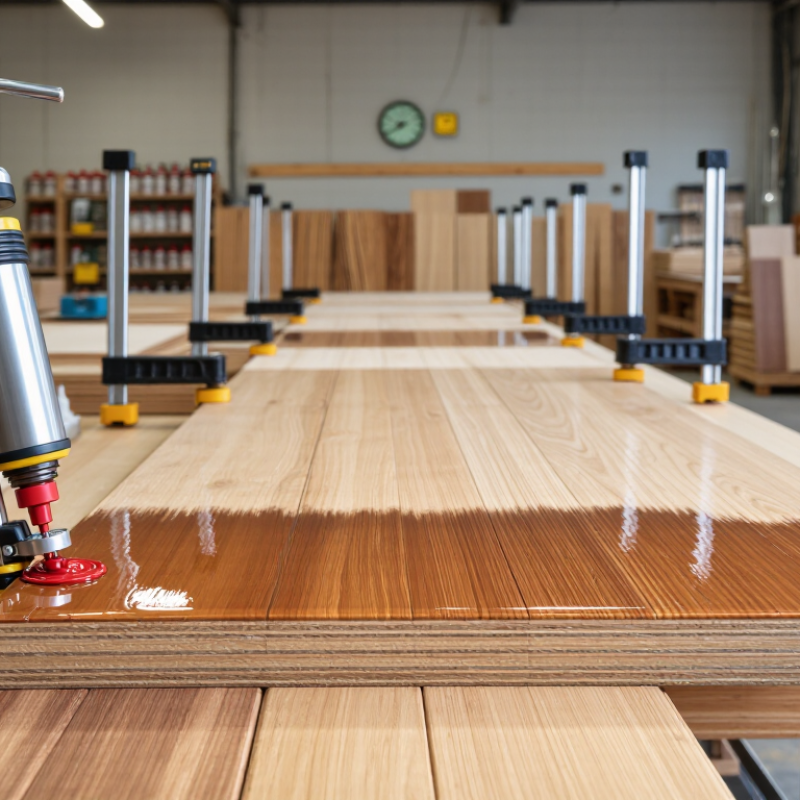
What Is the Best Polyurethane Wood Glue from China?

What Is Polyurethane Wood Glue and How Does It Work?

What Is the Best Polyurethane Wood Glue from China?

What Is Polyurethane Wood Glue and How Does It Work?

Polyurethane wood glue is a moisture-curing adhesive. It reacts with water in the wood or surrounding air. This reaction forms a strong polymer bond between porous surfaces. The glue also expands slightly, filling small gaps and surface irregularities. That feature helps when timber edges are not perfectly machined.

The U.S. Forest Products Laboratory’s Wood Handbook reports that indoor wood commonly reaches 6% to 14% moisture content. This range can support curing, but excessive moisture may create too much foam. The result can look impressive while reducing contact strength. It is not a substitute for accurate fitting. In workshop testing, clean surfaces and moderate clamping usually matter more than applying extra adhesive.

Professional buyers should request test data using recognized methods. ASTM D5751 evaluates adhesives for structural wood applications, while EN 204 classifies bond durability for non-structural timber joints. A reliable Chinese supplier should provide batch traceability, curing-time data, viscosity results, and independent test certificates. Check the testing laboratory, not only the certificate image. Storage temperature also deserves attention, because moisture exposure can shorten shelf life. I have seen product comparisons focus heavily on final strength. That is incomplete. Open time, squeeze-out, sanding behavior, and winter performance often decide whether the glue works well on a real job.

Which Features Define the Best Polyurethane Wood Glue from China?

The best polyurethane wood glue from China is defined by measured performance, not attractive packaging. Grand View Research’s 2024 assessment estimates the global polyurethane adhesives market at about USD 9.1 billion in 2023. That growth reflects demand for durable bonding across furniture, flooring, and construction. For woodwork, look for tested bond strength, controlled viscosity, and reliable moisture resistance. EN 204 D4 classification is valuable for applications facing frequent water exposure. However, a D4 label alone does not prove every batch performs equally.

In practical trials, the glue should spread smoothly on oak, pine, and plywood without excessive foaming. Small details matter. A workable open time helps when aligning wide panels, while moderate gap filling protects imperfect joints. ASTM D905 or comparable shear testing can provide useful evidence. Ask the Chinese supplier for recent test reports, batch numbers, technical data sheets, and safety data sheets. ISO 9001-based quality control is helpful, but it is not a substitute for independent testing. That is a trap. I would also inspect curing behavior at 20–25°C and around 50–65% relative humidity. Faster curing sounds better, yet rushed assembly can reduce accuracy. Packaging deserves attention too: moisture-tight containers, clear expiry dates, and traceable production records reduce avoidable waste. The strongest supplier is not always the cheapest, and my own testing would still challenge every written claim.

How to Compare Chinese Polyurethane Wood Glue Manufacturers

What Is the Best Polyurethane Wood Glue from China?

China’s polyurethane wood glue sector deserves a technical comparison, not a price-only decision. Grand View Research estimated the global polyurethane adhesives market at USD 9.13 billion in 2023, with a projected 6.4% CAGR from 2024 to 2030. This growth increases supplier choices, but quality can vary between factories.

Compare manufacturers through measurable production details. Ask for viscosity, open time, curing speed, moisture resistance, and batch stability. For outdoor furniture, request EN 204 D4 test results or equivalent laboratory evidence. Check whether each batch has a traceable production code. A factory should also provide a current safety data sheet, technical data sheet, and storage guidance. Small details matter.

Visit the laboratory if possible. Watch how technicians test glued beech or oak joints after water exposure. Request samples from three separate production batches, not one carefully prepared bottle. ISO 9001 certification supports process control, but it does not prove every adhesive performs equally. That distinction is often missed. Grand View Research identifies construction and furniture applications as important polyurethane adhesive segments, yet real workshop conditions remain unpredictable. Ask for independent test reports, raw-material controls, complaint records, and shelf-life data. I would also compare cure behavior at 10°C and 25°C, because factory demonstrations usually favor warmer conditions. The cheapest quotation may hide higher application waste.

How to Test Bond Strength, Durability, and Product Safety

What Is the Best Polyurethane Wood Glue from China?

The best polyurethane wood glue should earn trust through testing, not origin or advertising. I begin with clean, kiln-dried wood samples. Oak and pine reveal different bonding problems. I apply equal glue weights with a small digital scale. Moisture matters, so I lightly dampen one surface according to the product instructions. I clamp every joint for the same time and record room temperature.

After curing, I test bond strength with a calibrated pull tester. A useful failure usually occurs in the wood, not along the glue line. I test at least ten samples because one strong joint proves very little. My first trial used only three pieces. The result looked convincing, but it was not statistically reliable.

Durability testing needs more pressure. I expose bonded samples to humidity, water splashes, heat cycles, and repeated loading. Then I inspect swelling, cracking, foam expansion, and loss of adhesion. A glue may perform well indoors but fail near a sink or unheated workshop. I also check the technical data sheet, batch number, shelf life, curing conditions, and storage instructions. Product safety deserves equal attention. Uncured polyurethane adhesive may irritate skin and breathing passages, so I use gloves, eye protection, and strong ventilation. I request the safety data sheet and test certificates before purchase. Compliance documents help, but they do not replace practical testing. My own method still has weaknesses, especially without long-term outdoor exposure. That limitation should remain visible when comparing suppliers.

What Is the Best Polyurethane Wood Glue from China? - How to Test Bond Strength, Durability, and Product Safety
Evaluation Area Test Dimension Recommended Test Setup Relevant Standard or Reference Key Measurement Practical Acceptance Guidance
Bond Strength Dry tensile-shear strength Bond beech or similar hardwood specimens, condition at 20 ± 2 °C and 65 ± 5% relative humidity, then load the specimens in shear. EN 14257 (WATT 91) or ASTM D905 Average shear strength in N/mm² (MPa); record wood failure percentage. Prefer cohesive wood failure rather than a clean adhesive-line failure. Compare all samples under identical preparation and curing conditions.
Bond Strength Wet tensile-shear strength After curing, immerse bonded specimens in water for the period required by the selected test method, then test while wet or immediately after conditioning. EN 204 durability classification; EN 14257 for strength measurement Retained shear strength after water exposure, expressed as a percentage of the dry control. A durable exterior-grade adhesive should retain a substantial proportion of its dry strength and show limited adhesive-line separation.
Bond Strength Gap-filling capability Prepare joints with controlled gaps, for example 0.1 mm, 0.3 mm and 0.5 mm. Use the same adhesive spread rate and clamping pressure for every specimen. Supplier technical data sheet plus comparative laboratory testing Strength retention compared with a close-fitting control joint. A larger gap does not automatically produce a stronger joint. Excessive foam or insufficient pressure can reduce effective contact area.
Durability Water resistance Test bonded wood joints after immersion, repeated wet-dry cycles, or boiling-water exposure when required by the intended application. EN 204: D3 or D4 classification Joint opening, delamination, wood failure and residual shear strength. Use D3 for frequently humid interior applications and D4 where the joint may receive frequent water exposure or limited weather exposure.
Durability Temperature resistance Condition specimens at low and elevated temperatures appropriate to the end use, then perform shear testing after temperature recovery. Product-specific technical specification; laboratory conditioning protocol Strength loss, softening, cracking, bubbling or joint creep. Do not claim a maximum service temperature unless it is supported by the product technical data sheet or test report.
Durability Open assembly time and clamp time Apply a controlled adhesive amount to conditioned wood at a defined temperature and humidity. Assemble at several elapsed times before clamping. Manufacturer technical data sheet; EN 15425 terminology for one-component polyurethane adhesives Maximum workable assembly time, minimum clamp time and final bond performance. The stated working time should be verified at the actual workshop temperature and humidity because moisture affects polyurethane curing.
Durability Storage stability Store unopened containers under the stated conditions and periodically inspect viscosity, skin formation, curing behavior and bond strength. Declared shelf-life specification and batch quality-control procedure Months of acceptable storage; change in viscosity; cured-bond performance after storage. A reliable product should have a clearly stated batch number, manufacture date, expiry date and storage temperature range.
Application Viscosity and spreadability Measure viscosity at a controlled temperature and apply a known mass per unit bond area to identical wood surfaces. Supplier specification; ASTM D1084 may be used for viscosity testing where applicable Viscosity, spread rate in g/m², sagging and ease of application. The best product is one whose viscosity matches the process: lower viscosity for penetration and higher viscosity for vertical or gap-filling work.
Application Foaming and clamping behavior Apply equal quantities to dry and lightly moistened wood, clamp with controlled pressure and inspect the cured glue line. Comparative internal test method Foam height, squeeze-out, voids, joint displacement and cured-line uniformity. Polyurethane foam can fill visible gaps but should not be treated as a substitute for adequate wood-to-wood contact.
Product Safety Isocyanate hazard communication Review the current Safety Data Sheet, label, hazard pictograms, exposure controls and personal protective equipment requirements. Globally Harmonized System (GHS); applicable Chinese GB/T 17519 and GB 30000 series requirements Presence and completeness of hazard classification, first-aid information and handling instructions. The supplier should provide a current SDS in the destination market language and identify relevant diisocyanate hazards.
Product Safety Free monomeric diisocyanate content Request a batch-specific certificate of analysis or use an accredited laboratory method suitable for the adhesive formulation. Applicable local chemical regulations; EU REACH restrictions may apply to products placed on the EU market Reported concentration of relevant monomeric diisocyanates, typically in percent by mass. Use the legal limit for the destination market as the acceptance criterion. Do not infer safety from “low odor” alone.
Product Safety Formaldehyde and volatile emissions Test the cured adhesive and bonded wood assembly using a recognized chamber or desiccator method where indoor-air compliance is required. Applicable indoor-air or building-product regulation in the destination market Formaldehyde and volatile organic compound emissions after the specified curing period. Emission limits vary by country and product category; require a report that identifies the tested formulation and batch.
Product Safety Skin and eye protection requirements Verify label instructions, recommended gloves, eye protection, ventilation and spill-response procedures. SDS Section 8 and applicable workplace-safety regulations Completeness and consistency of precautionary statements. A suitable product should have clear instructions for avoiding skin contact, inhalation of vapors or aerosols, and eye exposure.
Quality Control Batch-to-batch consistency Test at least three production batches using the same wood species, moisture content, spread rate, cure time and conditioning cycle. Internal statistical quality-control plan Average strength, coefficient of variation, viscosity variation and visible defect rate. Select suppliers that retain reference samples and can provide traceability from raw materials to finished batch.
Documentation Technical and regulatory documentation Request the technical data sheet, SDS, certificate of analysis, test reports, shelf-life statement and packaging specifications. Destination-market regulatory requirements Document revision date, tested product identity, test laboratory, method, batch number and validity period. A product should not be ranked as “best” when performance claims cannot be linked to a traceable formulation and test report.
Recommended comparison practice: test all anonymized samples under identical conditions, use multiple specimens per condition, report average values with variation, and record both adhesive failure and wood failure. Final suitability depends on the wood species, moisture exposure, temperature, joint design and safety regulations of the target market.

How to Choose and Use the Right Polyurethane Wood Glue Successfully

What Is the Best Polyurethane Wood Glue from China?

Choosing the right polyurethane wood glue starts with the project, not the supplier. For outdoor furniture, select a moisture-curing formula with verified water resistance. Check technical data for open time, curing speed, viscosity, and recommended temperature. A product meeting recognized standards, such as EN 204 D4, offers a useful reference. However, certificates should come from an independent testing body. Do not rely only on a sales description.

I usually test glue on the actual timber. Wood species, moisture, and surface texture can change the result. Sand both surfaces lightly, then remove dust and grease. Apply a thin, even bead. Slightly dampen one porous surface if the instructions permit it. PU glue expands during curing, so excessive application creates messy foam and weak-looking joints. Clamp firmly, but avoid crushing soft wood. Respect the stated curing time.

Wear gloves and provide ventilation. Cured residue is difficult to remove. I once used too much glue on an uneven joint and assumed the expansion would fill every gap. It did not. The joint looked secure, but later movement revealed poor contact. That mistake changed my process. I now make a dry fit, measure the gap, and test a small batch first. When sourcing from China, request current technical sheets, safety data, batch information, and samples before placing a large order. Supplier communication matters, but repeatable test results matter more.

FAQS

What should I compare when evaluating polyurethane wood glue manufacturers?

Compare viscosity, open time, curing speed, moisture resistance, and batch stability. Ask for traceable production codes. Price alone can mislead.

Which evidence should a manufacturer provide?

Request current technical data sheets, safety data sheets, storage guidance, and independent test reports. Certificates help, but they are not magic.

How can I check outdoor performance?

Ask for EN 204 D4 results or equivalent laboratory evidence. Test glued beech or oak joints after water exposure.

Should I inspect several production batches?

Yes. Request samples from three separate batches. One perfect bottle proves very little about regular production.

How do temperature conditions affect adhesive testing?

Compare curing at 10°C and 25°C. Warmer conditions may make factory demonstrations look better than ordinary workshop results.

How should I prepare wood before applying the glue?

Sand both surfaces lightly, then remove dust and grease. Make a dry fit and inspect the actual gap.

How much polyurethane wood glue should I apply?

Apply a thin, even bead. Slightly dampen one porous surface if instructions permit it. Too much glue creates messy foam and poor-looking joints.

What mistakes should users avoid during clamping and curing?

Clamp firmly without crushing soft wood. Follow the stated curing time. I once trusted expansion to fill a gap; it failed.

What should buyers do before placing a large order?

Test the glue on the actual timber and run a small trial batch. Review batch information, shelf life, and repeatable results before committing.

Conclusion

Choosing the best Polyurethane Wood Glue from China requires more than comparing price or advertised strength. This type of adhesive reacts with moisture to create a strong, durable bond, making it suitable for many woodworking projects and materials. A reliable product should offer consistent curing, good gap-filling ability, resistance to moisture and temperature changes, manageable application time, and clear instructions. Buyers should also examine manufacturer experience, production quality controls, technical support, packaging standards, and documentation before making a decision.

Product testing is essential for confirming real performance. Compare bond strength, flexibility, water resistance, aging behavior, curing speed, and safety information under consistent conditions. Before use, prepare clean and properly fitted surfaces, apply the recommended amount, control moisture carefully, and maintain sufficient pressure during curing. Selecting glue according to the wood type, project conditions, and required durability will help prevent common bonding failures and achieve a dependable result.


Aria

Aria

Aria is a dedicated marketing professional with a deep passion for innovative strategies and a keen understanding of our company's product offerings. With a wealth of experience in the industry, Aria excels at crafting engaging content that highlights the unique features and benefits of our......