How to Choose the Best Tile Grout for Your Project?

Time:2026-06-13 Author:Isabella
0%

Choosing the right tile grout is crucial for any tiling project. Tile grout not only enhances aesthetics but also affects durability. With numerous options available, it can be challenging to decide which type suits your needs best. The color, composition, and moisture resistance of grout play significant roles in your project’s success.

When selecting tile grout, consider your tile type and the location. For wet areas, such as bathrooms, moisture-resistant grout is essential. A poorly chosen grout can lead to staining or cracking over time. Research different formulations, and don’t hesitate to consult experts. Understanding the properties of various grouts ensures a more robust and lasting finish.

Be aware that every grout type has its pros and cons. For instance, epoxy grout is durable but more complex to apply. Cement-based grout is user-friendly, yet it may require sealing. Reflecting on your project's specific needs can guide you in making educated choices. Always remember that the right grout enhances not only the look but also the longevity of your tile work.
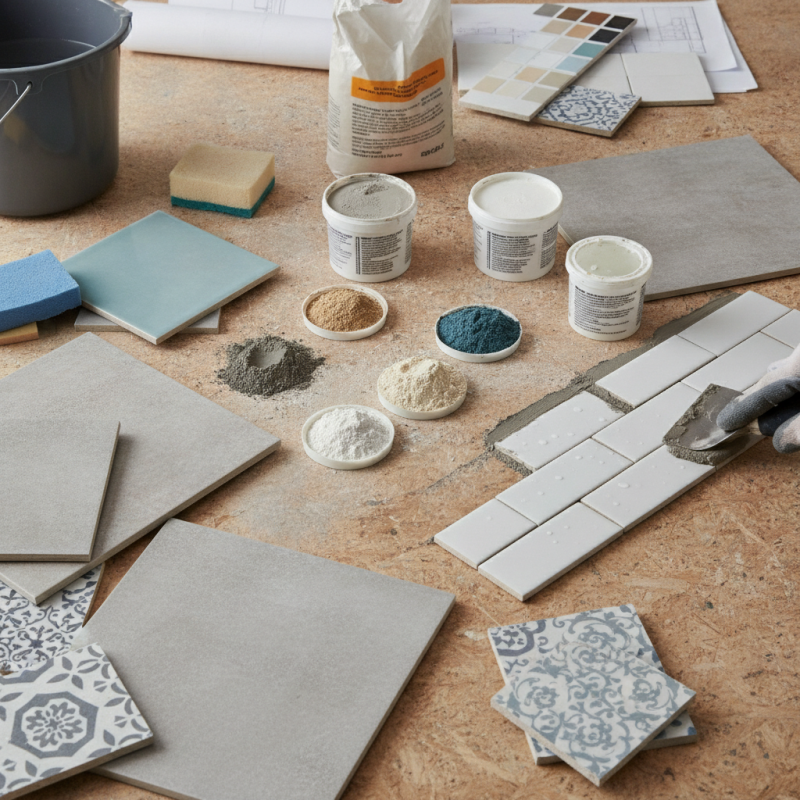
How to Choose the Best Tile Grout for Your Project?

Understanding Different Types of Tile Grout Available in the Market

When selecting tile grout for your project, it's essential to understand the various types available in the market. There are primarily three categories: cement-based, epoxy, and urethane grouts. Each serves different purposes and has unique properties, making it crucial to choose wisely.

Cement-based grout is the most commonly used type. It’s affordable and easy to work with but may require sealing to prevent stains. In a survey by the Tile Council of North America, about 70% of contractors prefer cement grout for its versatility. However, it is susceptible to cracking in high-moisture areas. On the other hand, epoxy grout is highly durable and water-resistant. This type is ideal for areas exposed to heavy water usage, like kitchens and bathrooms. Its chemical resistance makes it a solid choice, but application can be tricky. A report by the American Institute of Architects noted that only 20% of project managers opt for epoxy grout due to its complexity.

Urethane grout is gaining popularity for its flexibility and stain resistance. Unlike cement-based grout, urethane does not require sealing and is easier to clean. According to a recent industry analysis, urethane grout can outperform cement grout in certain applications, but it comes with a higher price tag. It’s important to weigh the pros and cons of each type based on your specific needs and conditions. Often, the choice comes down to balancing cost-effectiveness and longevity, making it a decision that requires careful consideration.

Evaluating Factors for Choosing the Right Grout for Your Project

Choosing the right tile grout is crucial for any tiling project. The factors to consider include the type of tile, the environment, and the grout's intended use. For instance, in wet areas like bathrooms, a water-resistant grout is essential. Conversely, a decorative grout might work well in a kitchen backsplash.

Color is another key consideration. Grout color can enhance the beauty of tiles or create stark contrasts. Think about how the grout will age, too. Light-colored grouts may stain over time, while darker grouts typically hide stains better.

Also, consider the application technique. Some grouts require mixing, while others come pre-mixed. DIY enthusiasts should select a type they feel confident using. Remember, no grout is foolproof; mistakes may happen. Learning from them can lead to better choices in future projects. Taking your time to evaluate these factors carefully will lead to a more satisfying outcome.

How to Choose the Best Tile Grout for Your Project? - Evaluating Factors for Choosing the Right Grout for Your Project

Grout Type Water Resistance Flexibility Ease of Application Color Options Ideal Use Case
Sanded Grout High Moderate Moderately Easy Various Floor Tiles
Unsanded Grout Moderate Very High Easy Limited Wall Tiles
Epoxy Grout Very High Low Difficult Many High-moisture Areas
Latex Modified Grout High High Easy Moderate General Use

Comparing Cost, Durability, and Aesthetic Qualities of Grout Options

Choosing the right tile grout is essential. It impacts cost, durability, and aesthetics. Many options exist, each with unique qualities. For example, epoxy grout is strong and resistant to stains. However, it can be more expensive than cement-based options.

Cost is a major consideration. Cement grout often comes at a lower price point. This makes it appealing for budget-conscious projects. Yet, its durability may not match that of an epoxy grout. Homeowners should weigh the short-term savings against long-term performance.

Aesthetic qualities matter too. Grout can enhance or detract from the overall look of your tiles. Darker shades may hide stains but can make spaces feel smaller. Lighter colors, while fresh and open, require more maintenance. Testing samples can help visualize the final result. It’s worth the effort to avoid regrettable decisions down the line.

Assessing Application Methods and Maintenance Requirements for Grout

When selecting grout for your tiling project, it’s essential to consider application methods and maintenance requirements. Proper application can significantly affect the longevity and performance of the grout. For instance, epoxy grout, known for its strong bond and stain resistance, requires a precise mixing process. According to the Tile Contractors' Association of America, improper mixing can lead to issues like cracking or discoloration.

Regular maintenance also varies based on the grout type used. Cement-based grouts often need sealing to prevent moisture infiltration and stains. A study by the National Tile Contractors Association reveals that unsealed grout can absorb liquids, leading to mold growth. On the other hand, epoxy grouts, while more durable, may require special cleaners to avoid damage. This means you should be prepared for different cleaning routines.

Understanding these application and maintenance details ensures that you choose the right grout for your needs. However, many DIY enthusiasts may overlook these aspects. This can lead to mistakes and costly repairs down the line. Balancing ease of application with long-term performance is crucial for any successful tiling project. Take the time to fully assess your grout options to avoid potential pitfalls.

Tile Grout Types and Their Maintenance Requirements

Exploring Color Matching Techniques for a Cohesive Design with Grout

Choosing the right grout color is crucial for your tile project. Color matching techniques can greatly enhance the overall aesthetic. Grout color can influence the perception of space. According to a recent industry report, 45% of homeowners express dissatisfaction with muddled designs caused by poor color choices. A well-matched grout creates a seamless flow between tiles. This cohesive look makes any room feel more pulled together.

When selecting grout, consider the hue of your tiles. Light-colored tiles paired with a darker grout can create a striking visual contrast. Conversely, using a similar shade for both can lead to a more subtle effect. A study by the Tile Council of North America found that 76% of interior designers recommend using grout that closely matches the main tile color for a streamlined finish. However, be cautious with this approach; if too many similar colors are used, it may lead to a monotonous look.

Texture is also a key factor in color perception. A glossy finish can reflect light differently than a matte surface. This can profoundly affect how color appears in the overall design. Remember, the space should have character and personality. If the grout looks too uniform, it might lack depth. Experimentation can reveal the perfect balance between style and functionality.

FAQS

: What are the main types of tile grout?

: The main types are cement-based, epoxy, and urethane grouts. Each has unique properties for different needs.

Why is cement-based grout popular?

It’s affordable and easy to use. However, it may require sealing to avoid stains.

What are the downsides of cement-based grout?

It can crack in high-moisture areas. Consider the environment before making your choice.

Is epoxy grout worth the complexity?

Epoxy grout is durable and water-resistant. Yet, many find its application challenging and opt for easier options.

How does urethane grout compare to others?

Urethane grout offers flexibility and stain resistance. It doesn’t need sealing but can be more expensive.

What factors should homeowners consider when choosing grout?

Cost, durability, and aesthetics are key factors. Balancing short-term savings and long-term performance is crucial.

How does grout color impact tile design?

It can enhance or detract from the overall look. Matching colors creates a cohesive design, while contrasts add interest.

Are darker grout colors better for stain concealment?

Yes, darker colors can hide stains, but they might make spaces feel smaller. Maintenance is also a consideration.

How can texture affect grout color perception?

Glossy finishes reflect light differently than matte surfaces. This can change how color appears in your design.

What should you do if you're unsure about grout color?

Testing samples can help visualize the final outcome. Avoid uniformity for a more dynamic space.

Conclusion

Choosing the best tile grout for your project involves understanding the various types of grout available in the market, each with unique properties suited to different applications. Factors to evaluate include the grout's cost, durability, and aesthetic qualities, ensuring a balance between functionality and visual appeal.

Additionally, assessing the application methods and maintenance requirements is crucial for achieving lasting results. Employing effective color matching techniques can enhance the overall design, allowing the grout to complement the tiles seamlessly. By considering these aspects, you can select a tile grout that meets both your practical needs and design vision.


Isabella

Isabella

Isabella is a dedicated marketing professional with a sharp focus on driving brand growth and engagement through strategic content creation. With an extensive background in digital marketing, she combines her passion for storytelling with her keen understanding of industry trends to deliver......