Choosing the best Wood Floor Glue depends on more than the wood species. The subfloor, plank size, room conditions, and installation method all matter. A product that works well beneath engineered oak may not suit solid hardwood or a concrete slab. Small details count. Check the flooring maker’s instructions before buying adhesive, since some warranties require specific products or installation methods.
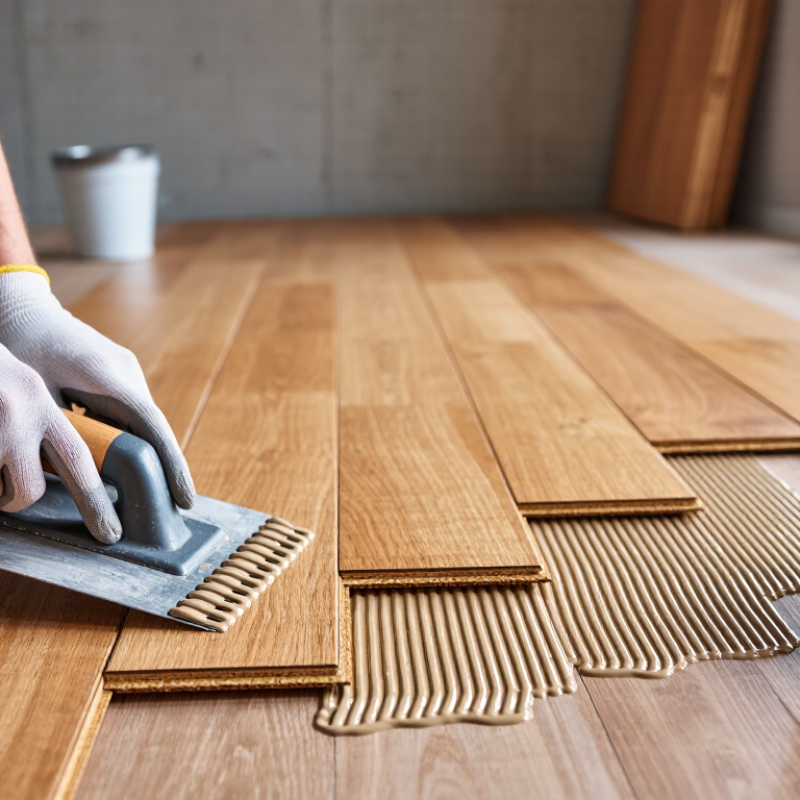
A reliable comparison looks at bond strength, moisture control, flexibility, and cleanup. Read the adhesive label closely. It should identify suitable flooring types and approved substrates, such as plywood or concrete. A notched trowel spreads the glue in even ridges; the correct notch size depends on the product. Too little adhesive can leave hollow spots, while too much may squeeze between boards. It gets messy fast. Temperature and humidity can also affect working time, so measure room conditions rather than guessing. A contractor’s experience can help, but it does not replace product instructions or a moisture test. There is no single best choice for every room. The right Wood Floor Glue is the one that matches the floor, subfloor, and site conditions, with clear technical guidance behind it. Even then, installation quality matters just as much as the bucket label. That part is easy to overlook.
What Is the Best Wood Floor Glue?
Wood floor adhesive is not one universal product. Its chemistry must match the wood, subfloor, moisture level, and movement expected in the room. Water-based acrylic adhesives cure as water evaporates, leaving a flexible film. They produce low odor and are easier to clean, but excess moisture can affect sensitive boards. Polyurethane adhesives react with moisture and form strong, elastic bonds. They tolerate slight movement, although application requires careful timing. Silane-modified polymer adhesives also cure through moisture and remain flexible after curing. This flexibility helps reduce stress between the floor and subfloor.
Epoxy systems rely on a chemical reaction between resin and hardener. They can provide excellent strength, but they are less forgiving when surfaces are dusty or uneven. The bonding process begins with wetting, as the adhesive spreads across the subfloor. It then grips through mechanical interlocking and chemical adhesion. Trowel ridges matter. Too little adhesive leaves hollow areas, while excessive adhesive can slow curing and stain joints.
On site, installers often check concrete moisture before opening the adhesive. A clean surface is equally important. I have seen strong products fail because dust formed a weak boundary layer. That detail is easy to underestimate. Acclimated boards, correct open time, and steady pressure improve contact. Still, no adhesive removes every installation risk. Wood continues to respond to seasonal humidity, and rigid bonding choices may magnify movement. The “best” glue is therefore the one whose chemistry suits the entire floor assembly, not merely the strongest label.
What Is the Best Wood Floor Glue?
The best wood floor glue depends on the subfloor, wood species, and moisture readings. Before opening an adhesive container, test the concrete properly. ASTM F2170 measures internal relative humidity inside the slab. For many wood flooring systems, the target is 75% RH or lower. Always confirm the adhesive manufacturer’s stated limit.
Use probes at the required depth, not only near the surface. A slab may feel dry while holding moisture deeper inside. Record the room temperature, probe locations, and readings. These details make the installation easier to defend and troubleshoot. Small mistakes matter here.
ASTM F1869 measures moisture vapor emission with calcium chloride. A commonly referenced limit for wood flooring is 3 pounds per 1,000 square feet in 24 hours. However, that number is not universal. Project specifications and adhesive instructions may require a lower result. F2170 and F1869 also measure different conditions, so one test cannot replace the other.
Choose an adhesive rated for the measured moisture level and the flooring construction. Apply it over a clean, sound, and properly prepared substrate. Dust, curing compounds, and weak concrete can reduce bond strength. In field work, I have seen rushed testing create expensive repairs later. The uncomfortable lesson is simple: a premium glue cannot correct an unverified slab. Recheck questionable areas. Needing another test is better than guessing.
| Decision factor | What to check | Practical guidance | Why it matters |
|---|---|---|---|
| Best glue for the floor | Adhesive type, wood species, plank width, and installation method | Choose an adhesive explicitly approved for the specific solid or engineered wood flooring and the substrate. There is no single adhesive that is best for every installation. | Compatibility affects bond strength, movement accommodation, and warranty compliance. |
| ASTM F2170 in-situ RH | Relative humidity measured by probes in holes drilled into a concrete slab, following the current applicable procedure | Use ≤75% RH as a conservative screening benchmark when that is the project requirement. Confirm the adhesive and flooring instructions; some systems specify a different maximum. | ASTM F2170 is a test method. It does not itself set a universal pass/fail RH limit for wood flooring adhesives. |
| ASTM F1869 moisture vapor emission | Moisture vapor emission rate (MVER), reported in lb/1,000 ft²/24 h, using the calcium-chloride test method | A limit of 3 lb/1,000 ft²/24 h is sometimes used as a conservative screening value, but it is not a universal ASTM acceptance limit. Follow the flooring and adhesive system’s stated maximum. | F1869 results are method- and condition-dependent and should not be treated as interchangeable with F2170 RH results. |
| Selecting a moisture limit | Written limits for the adhesive, flooring, primer, and any moisture-control system | Use the most restrictive applicable requirement and confirm which test method the installation specification accepts. Do not convert an RH result into an F1869 value. | Different products and systems can have different tested tolerances and required preparation. |
| When readings exceed the limit | Repeat or verify testing, assess the source of moisture, and review slab conditions | Do not install until the specified limit is met or an approved moisture-mitigation system is installed and accepted for the complete flooring assembly. | Excess moisture can contribute to adhesive failure, wood movement, cupping, or other flooring damage. |
| Subfloor and jobsite checks | Slab cleanliness, surface preparation, flatness, temperature, and ambient conditions | Follow the adhesive’s written requirements for substrate preparation, application, open time, and curing. Record test locations, dates, and results. | Moisture testing alone does not establish that the substrate is ready for installation. |
Note: ASTM F2170 and ASTM F1869 describe test methods, not universal adhesive acceptance limits. Always verify current project specifications and the written instructions for the complete flooring system.
What Is the Best Wood Floor Glue?
Comparing Urethane, MS Polymer, and Epoxy Adhesives by Performance
Choosing wood floor glue depends on movement, moisture, and installation speed. No adhesive wins every room.
Urethane adhesives remain a practical choice for solid and engineered wood flooring. They handle seasonal expansion well and bond strongly to prepared concrete. Their flexible film can absorb small subfloor movements. However, some formulas are messy and difficult to remove after curing. A clean trowel and careful spacing matter. Moisture testing still matters. Adhesive cannot repair a damp slab.
MS polymer adhesives offer a balanced installation experience. They usually have low odor, good elasticity, and easier surface cleanup. This makes them useful in occupied homes or smaller rooms. Their bond can remain flexible as timber responds to humidity. Yet, performance varies between formulations. I would not select one from price alone. Check open time, curing conditions, and approved substrates in the technical data.
Epoxy adhesives provide excellent hardness and strong resistance to demanding conditions. They can suit areas needing high bond strength and limited movement. That strength has a weakness. A rigid epoxy layer may transfer stress into unstable timber or uneven substrates. Mixing accuracy also affects the result. Too little attention there can create soft spots or brittle failure. Experienced installers inspect the slab, measure moisture, and test adhesion before committing to the full floor. Sometimes, the most expensive glue is simply the wrong glue.
The best wood floor glue begins with the subfloor, not the bucket. Before installation, I inspect the concrete for dust, laitance, cracks, grease, and uneven areas. ASTM F710 provides a useful framework for checking concrete readiness. It emphasizes a clean, dry, smooth, and structurally sound surface.
Moisture testing deserves careful attention. I use an in situ relative humidity test when the project requirements call for it. Calcium chloride testing and concrete pH checks may also support the evaluation. Results should match the adhesive and flooring instructions. A small mistake here can trap moisture beneath the boards. That failure may appear weeks later.
Coverage changes with trowel size, substrate texture, adhesive temperature, and installer pressure. I measure the first section instead of trusting the label alone. A 4-gallon container may cover less than expected on rough concrete.
Open time matters just as much. Spread only an area that can receive flooring while the adhesive remains workable. Wind, heat, and low humidity can shorten that window. Touching the adhesive too late may reduce transfer to the board. Too early, and boards can slide or rise.
I have sometimes spread too much adhesive, then rushed the layout. That was avoidable. A small test area would have revealed the working time before installation expanded.
What Is the Best Wood Floor Glue?
The best wood floor glue depends on species, climate, subfloor, and warranty requirements. There is no universal winner. Dense species, such as maple, move differently from softer woods. The USDA Forest Products Laboratory’s Wood Handbook reports that tangential shrinkage is often about twice radial shrinkage. That movement can stress a rigid adhesive.
Climate matters every day. The National Wood Flooring Association recommends maintaining indoor humidity near 30% to 50%, with stable temperatures. In a dry winter room, wide planks may open at the joints. In humid conditions, they may expand and press against walls. A flexible, moisture-resistant adhesive can accommodate some movement, but it cannot correct poor acclimation or an unstable subfloor. Small details matter.
Warranty language deserves careful reading. Use only an adhesive approved for the flooring system, substrate, and installation method. The NWFA Installation Guidelines emphasize following flooring and adhesive instructions, including moisture testing. Industry test methods, such as ASTM F2170 for concrete humidity, help verify subfloor conditions before installation. A label claiming “moisture control” is not enough.
Experienced installers often test a small area first. That habit prevents expensive surprises. I would still question any recommendation based only on price. Cure time, trowel coverage, wood porosity, and cleanup can change the result. Sometimes the technically strongest glue is the wrong choice for a sensitive species or a warranty with narrow conditions.
Choosing the Best Glue for Wood Species, Climate, and Warranty Needs
Wood species differ in how much they move as moisture content changes. Higher shrinkage values suggest greater movement potential, so consider an adhesive system approved for the flooring and subfloor, the expected climate, and the installation method. These figures are approximate shrinkage from green to oven-dry wood—not predictions of installed-floor movement or a rating of adhesive performance. Always follow the flooring and adhesive manufacturers’ written instructions and warranty requirements.
Source: USDA Forest Products Laboratory, Wood Handbook: Wood as an Engineering Material. Values are approximate percentages.
No single adhesive suits every room. Consider floor movement, moisture, subfloor condition, and installation speed.
Urethane handles seasonal expansion and bonds strongly to prepared concrete. Its flexible layer absorbs small subfloor movements. Cleanup can be difficult after curing.
It often has low odor, good elasticity, and easier surface cleanup. Check its open time and approved substrates. Formulas vary.
Epoxy offers a hard, strong bond for areas with limited movement. Its rigidity may stress unstable timber or uneven substrates.
Look for dust, cracks, grease, and uneven areas. The surface should be clean, dry, smooth, and structurally sound. Small flaws matter.
Moisture trapped beneath boards can cause problems weeks later. Use the test methods required for the project and adhesive.
Trowel size, concrete texture, temperature, and installer pressure all affect coverage. Test a small section. A rough slab may use more.
Spread only the area you can cover while the adhesive remains workable. Heat, wind, and low humidity may shorten that window. I have rushed this before; a test patch would have helped.
Choosing the best Wood Floor Glue depends on the flooring material, subfloor condition, climate, and warranty requirements. This guide explains how urethane, MS polymer, and epoxy adhesives differ in chemistry, flexibility, moisture resistance, strength, and curing behavior. It also highlights why subfloor preparation is essential, including ASTM F710 checks for cleanliness, flatness, and dryness. Moisture testing should follow recognized methods such as ASTM F2170, with relative humidity generally at or below 75%, while ASTM F1869 limits help evaluate moisture vapor emission. Installation performance also depends on practical factors such as coverage rate, open time, working temperature, and curing conditions. By comparing these technical characteristics with the wood species and environmental demands of each project, installers can select an adhesive that provides reliable bonding, reduces movement-related problems, and supports long-term floor performance.

Jinfang