Explore our industrial-grade construction formulations engineered to provide superior structural integrity under demanding architectural environments.
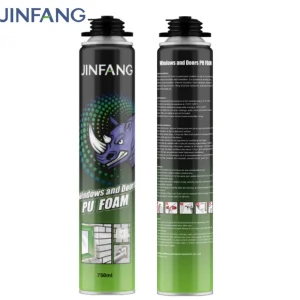
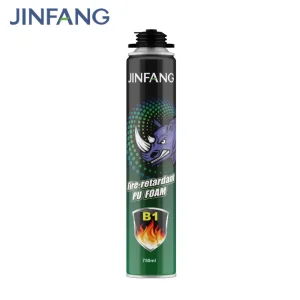
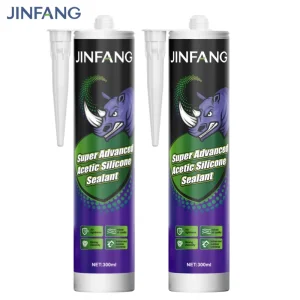
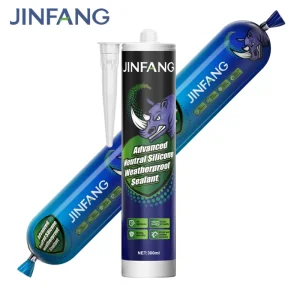
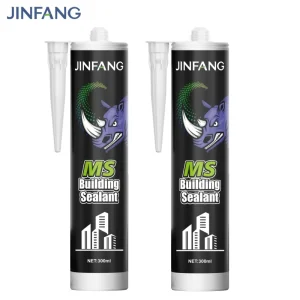
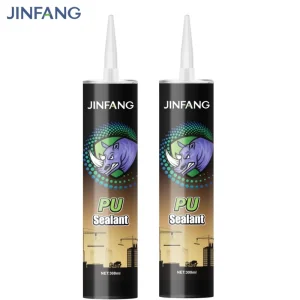
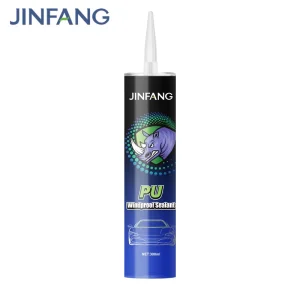
Unlike standard non-sag (thixotropic) sealants, Self-Leveling Silicone Sealant is designed with low viscosity parameters. It behaves as a slow-flowing liquid when extruded, utilizing gravity to flow directly into horizontal joint grooves, filling micro-crevices completely without the need for manual tooling.
This flowable profile is achieved through moisture-curing Room Temperature Vulcanizing (RTV-1) silicone polymer systems. Once exposed to atmospheric moisture, the polymer cross-links into a highly elastomeric, rubber-like barrier capable of handling up to 100% expansion and 50% compression cycles. This makes it the absolute industry benchmark for concrete expansion joints on highways, airport runways, and parking structures.

Procurement departments and project engineers must match the joint chemistry to the ambient stresses. Below is a comparative technical matrix mapping performance metrics across major chemistries:
| Property Parameter | Self-Leveling Silicone Sealant | Polyurethane (PU) Sealant | MS Polymer (Silyl-Modified) |
|---|---|---|---|
| UV & Weathering Resistance | Outstanding (No degradation, cracking, or chalking under direct sun) | Moderate (Susceptible to UV degradation over 3–5 years) | Excellent (Highly stable polymer backbone) |
| Joint Movement Capability | +100% / -50% (High Elastomeric Recovery) | ±25% to ±50% (Medium movement resilience) | ±25% to ±50% (Moderate performance) |
| Viscosity/Self-Leveling Behavior | Perfect self-leveling flow, voids-free filling | Variable thixotropic or slow self-leveling | Typically non-sag (requires tooling for horizontal joints) |
| VOC Emissions & Sustainability | Very Low VOC, Neutral Cure, No Odor | Higher VOC, contains traces of Isocyanates | Isocyanate-free, ultra-low VOC |
| Service Temperature Range | -50°C to +150°C (Unparalleled extremes survival) | -40°C to +80°C (Susceptible to hardening at low temp) | -40°C to +90°C (Good temperature performance) |
Analyzing the shifting patterns in horizontal joint sealants from high-volume procurement perspectives.
Global warming has driven temperatures to record extremes. Civil infrastructure requires joint sealants that will not soften, flow, or track in hot summers (up to 70°C road surfaces) nor brittle and crack in freezing winters. Modern self-leveling silicones remain flexible indefinitely, ensuring multi-decade durability.
With global construction labor costs rising, manual troweling of horizontal joints is economically unviable. Contractors now demand high-volume self-leveling sealants packaged in large drums (55 gallons) designed for heavy-duty automatic pump extraction and rapid mechanical tooling.
Leading standards such as LEED v4.1, BREEAM, and EU Ecolabel have set strict maximum limits for VOCs in architectural sealants. Procurement managers now screen factories to ensure formulations exclude dangerous solvents, organotin compounds, and toxic plasticizers.
Strategically located in the heart of Shandong Province—a major industrial hub in China—we stand as a premier manufacturer specializing in the research, development, and production of high-performance adhesive and sealant products.
Our state-of-the-art facility features a fully integrated automated manufacturing system. It runs from raw material bulk storage and automatic gravimetric dosing to continuous double-screw compounding, multi-stage degassing, and high-speed automatic cartridge and sausage packing lines. By leveraging digital control loops, we achieve high-precision control of the viscosity and curing rates of our self-leveling silicone sealants, guaranteeing consistent quality across large-volume production runs.
Countries Reached Worldwide
Days Average Order Lead Time
Client Retention & Repeat Order Rate
How Jinfang bridges chemical engineering research with heavy-duty construction applications.
We maintain deep, structured R&D partnerships with leading Chinese universities, including Shandong University, Xiamen University, and Linyi University. These partnerships allow us to recruit top-tier scientific talent, accelerate the development of advanced polymer formulas, and conduct atomic-level research into silicone adhesion promoters and plasticizer-free networks.
Our commitment to green and sustainable manufacturing is backed by rigorous testing. We have obtained a series of enterprise and product certifications, including ISO 9001, ISO 14001, and EU IROS. This enables seamless entry into complex regulatory environments across North America, Europe, and Asia-Pacific.
Proven durability for key infrastructure and automotive projects around the world.
Airports require sealants that can withstand severe thermal expansion cycles and the extreme shear stresses of aircraft landings. Our formulations resist fuel spills, high-velocity jet wash, and joint movement up to +100%.
Continuous bridge deck concrete joints are subjected to heavy vibrations and moisture accumulation. The high elastic recovery of our self-leveling silicone sealant keeps moisture from penetrating the structural rebar.
Forklifts and automated guided vehicles (AGVs) put heavy stress on concrete joint edges. Our high Shore-A self-leveling formulations protect concrete joint edges from chipping while allowing seamless floor transitions.
Beyond civil engineering, our custom formulations are optimized for automotive vibration damping, component bonding, and air/water sealing, helping manufacturers improve vehicle safety and comfort.
Formulating customized chemical solutions for complex, high-volume projects.
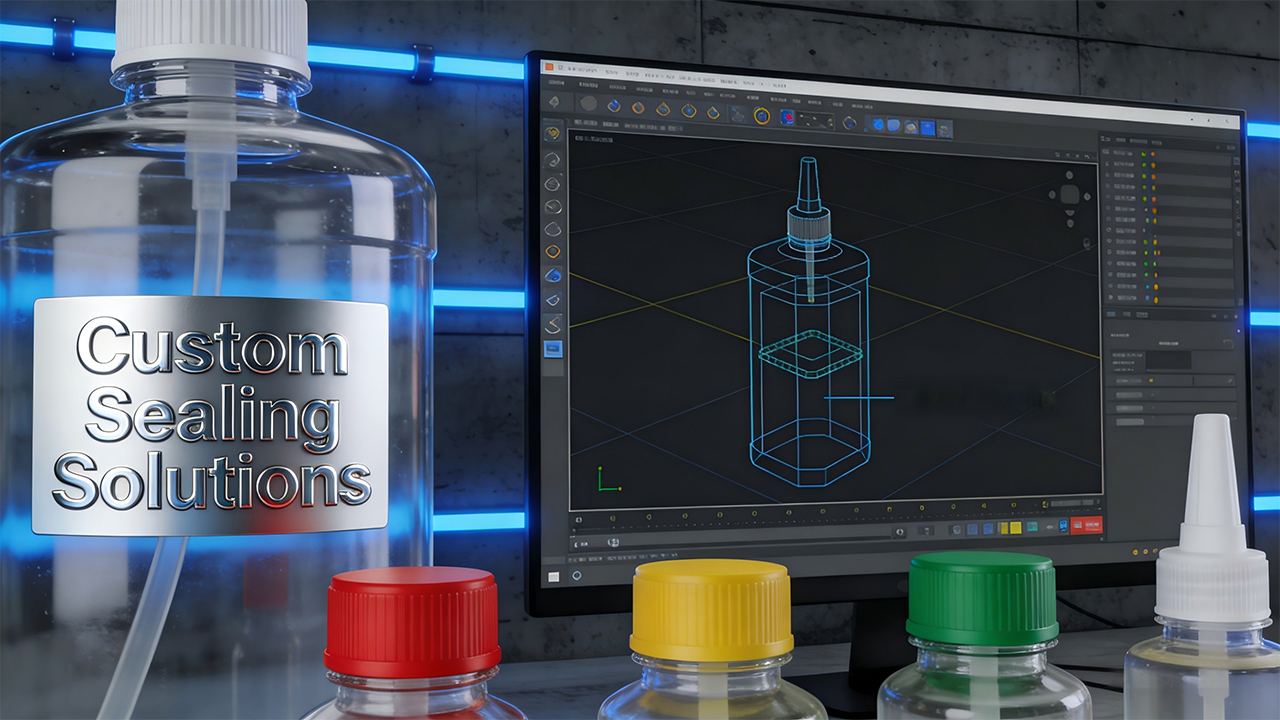
Our chemists can modify cure times, viscosity ratings (from ultra-flowable to semi-leveling), mechanical elongation properties, and color specifications to match your target substrates and regional standards.
We supply products in 300ml cartridges, 600ml foil sausages, 20L pails, and 200L (55-gallon) industrial drums. Private labeling, multi-lingual warnings, and custom carton designs are fully integrated into our packaging lines.
Every customized formulation is delivered with complete documentation, including up-to-date Safety Data Sheets (SDS), technical datasheets (TDS), VOC compliance declarations, and country-of-origin certificates.
Critical technical insights for procurement officers and structural engineers.
Self-leveling silicone sealants are formulated with a lower dynamic viscosity. They are designed to behave as flowable liquids that rely on gravity to settle into horizontal joints, creating a smooth surface without manual tooling. Non-sag (thixotropic) sealants have high yield stress, preventing them from running or slumping. This makes them ideal for vertical joints, window frames, and overhead applications.
For optimal chemical bonding, concrete substrates must be clean, dry, and fully cured (typically 28 days for new concrete). Applying silicone to a damp substrate can lead to bubbling during cure, poor adhesion, and premature cohesive failure. In humid environments, using a specialized concrete primer can help ensure strong adhesion.
Our self-leveling silicone sealant relies on atmospheric moisture to cure. It typically forms a tack-free skin within 30 to 60 minutes at 25°C and 50% relative humidity. The sealant cures at a rate of approximately 2-3mm in depth per 24 hours. Deep joints may require several days to cure completely before they can be opened to heavy traffic.
Our structural and horizontal joint sealants are engineered to meet or exceed major global standards, including ASTM C920 (Class 100/50), ISO 11600, and standard European CE certifications. Every batch is tested in our laboratory for tensile strength, elongation, Shore A hardness, and elastic recovery to ensure consistent field performance.
The standard design ratio for expansion joints is 2:1 (width to depth). The minimum joint width should be 6mm (1/4 inch), and the minimum depth should be 6mm. For larger joints up to 50mm (2 inches) wide, the depth is typically kept around 12.5mm (1/2 inch). A closed-cell backer rod should always be used to control sealant depth and prevent three-sided adhesion.
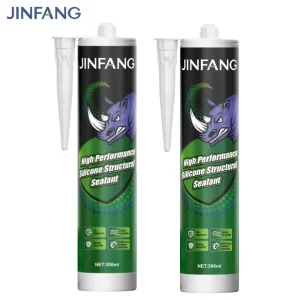
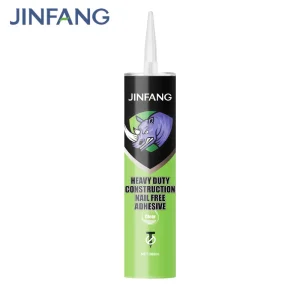
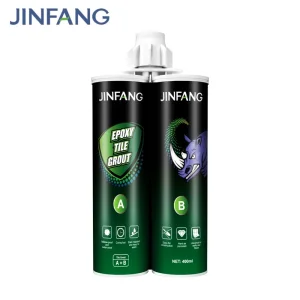
Explore our structural sealants, chemical anchors, and high-performance adhesives designed for modern industrial manufacturing.
 Jinfang